
Preventing Slip Hazards in Chicago Shower Remodels: Waterproofing and Drainage
Safer Chicago Showers Start with Smarter Tile Choices
Shower floors get slick fast, especially in Chicago. People track in rain, slush, and salt, then step into a hot shower with wet feet and cold floors. When the tile is smooth and glossy, that mix of water, soap, and shampoo can turn into a skating rink.
For anyone planning a bathroom remodel in Chicago, tile is one of the biggest safety decisions you will make. It is not just about picking a pretty pattern. The size of the tile, the way it is laid out, the slope under it, and how it meets drains and curbs all affect how safe your shower feels every single day.
At Wrigleyville Handyman and Remodeling Incorporated, we focus on tile choices that work with older Chicago homes. We pay attention to how the tile interacts with waterproofing, drain locations, and even lighting and ventilation so your shower or steam shower looks great and helps prevent slips.
Slip-Resistant Tile Surfaces for Chicago Showers
The first layer of shower safety starts right under your feet. The floor tile you choose has more to do with traction than just about anything else in the space.
We often recommend smaller tiles on the shower floor, such as:
- Mosaics
- 2 x 2 tiles or smaller
- Penny rounds or hex mosaics
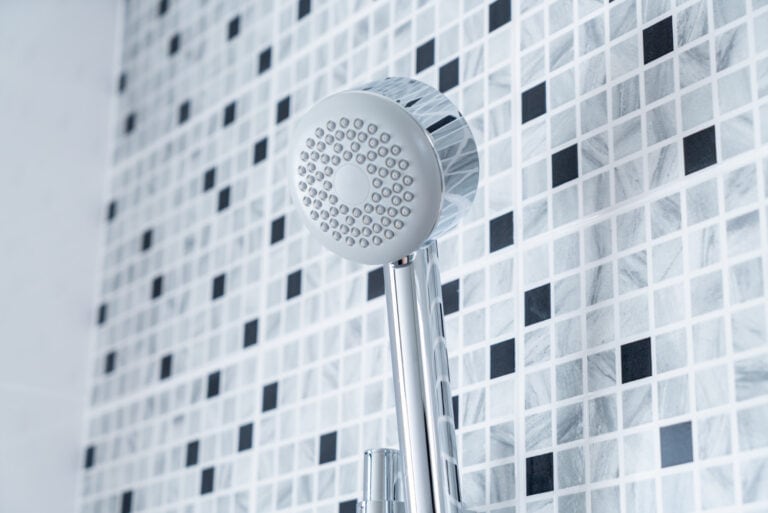
Smaller tiles mean more grout lines. Those grout lines add texture and grab, so your foot has more grip than it does on large, smooth pieces. This is especially helpful when soap, body wash, or shaving cream hits the floor.
- Finish matters too. For shower and steam shower floors, we usually recommend:
- Matte or honed porcelain, which gives a soft, low-sheen surface
- Light texture or subtle ridges that help your foot stay put
- Avoiding high-gloss polished tiles on the floor, since they get slick when wet
Another detail to watch is a tile’s slip-resistance rating, often shown as COF or DCOF on product specs. While the numbers can be technical, the main goal is simple: choose a tile that is rated for wet, barefoot use. Tiles meant for indoor pools, spas, or locker rooms can be a smart option for busy family bathrooms, where water is on the floor more often and kids move fast.
Tile Layout, Pan Slope, and Drain Decisions
Even the best non-slip tile can feel unsafe if water puddles on the floor. That is where pan slope and drain layout come in. A shower floor needs a gentle slope toward the drain so water actually leaves the surface instead of sitting there and creating a slimy film.
Tile size affects how well that slope works:
- Small mosaics bend and follow the slope more easily
- Large-format tiles are harder to shape around a drain without awkward cuts
- Poor layout can leave “birdbaths,” or low spots where water collects
Drain style also matters. Linear drains can sit along one wall or at the entry and often let us:
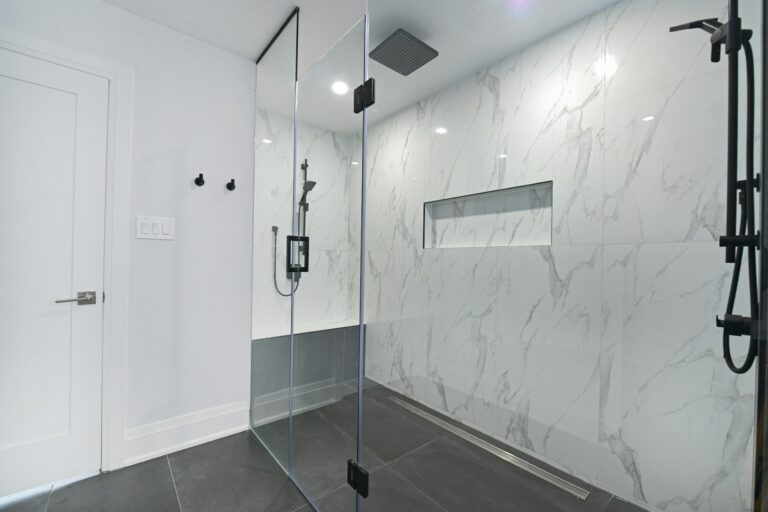
- Use larger tiles with a simple, one-direction slope
- Keep a cleaner look with fewer complex cuts
- Direct water away from the main walking path
Center drains are still very common, especially in older Chicago homes. They require the floor to slope from multiple sides, which means more detailed tile cutting. When this is not planned well, you can end up with lippage, where one tile edge sits higher than another. Those small bumps can become tripping points, especially for aging-in-place remodels.
With careful planning, we line up tile patterns and cuts around the drain so the floor feels smooth underfoot and water drains fast.
Tiled Curbs, Thresholds, and Transitions That Prevent Falls
The spot where you enter the shower can be just as risky as the floor itself. A slick, low-contrast curb can disappear visually, especially when the room is steamy.
We often recommend:
- A different color or texture on the top of the curb to “signal” the step
- Tiles that contrast slightly with the bathroom floor so the change is easy to see
- A grippier finish on the curb top, not a polished, slippery surface
The edge details matter too. Bullnose pieces, rounded tile trims, or profile edges help soften corners. Sharp corners can catch toes or scrape ankles.
For no-barrier or curbless showers, the goal is a smooth, almost invisible transition from bathroom floor to shower area. In older Chicago homes, that takes extra planning so tile heights line up while still handling water correctly. When it is done right, you get:
- Fewer tripping hazards at the entry
- Easier access for anyone with mobility issues
- A clean look that suits both classic and modern styles
Tile-Ready Walls for Grab Bars, Niches, and Seating
Tile choices do not stop at the floor. Wall tile layout can help you stay safe now and make it easier to add safety features later.
Before the walls are closed, blocking can be added inside the wall so future grab bars have solid backing. As tile installers, we plan grout lines and tile joints so:
- Grab bars can line up with grout lines instead of cutting through tiles
- Bars look like part of the design, not an afterthought
- Bars can be added in the future without cracking tiles
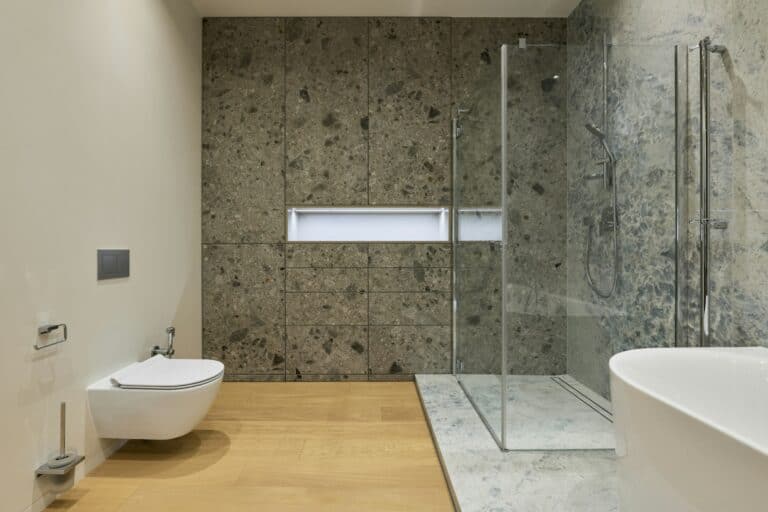
Niches and benches also need careful tile work. Poorly placed or sloped tile can create ledges where water and soap sit, turning into a slick mess over time. We aim to:
- Slightly pitch niche bottoms toward the shower so water drains
- Use larger tiles where possible to limit tiny, hard-to-clean ledges
- Carry patterns over benches so seams fall where they are less likely to collect grime
We also pay attention to vertical and horizontal alignment. When tile patterns are set with future accessories in mind, it is much easier to add hooks, shelves, or extra bars later without damaging the tile surface.
Using Tile Color, Pattern, and Sheen to Boost Safety
Good lighting is part of safety, and tile plays a big role in how light moves through a shower. In Chicago, with so many gray days and long evenings, that matters.
Lighter tiles with a low sheen reflect more light without creating glare. On floors, that helps you see:
- Small puddles
- Soap or shampoo spills
- Stray bath products
We often suggest using simple, not-too-busy patterns on shower floors. Very loud or high-contrast designs can make depth harder to judge, especially for older adults. A calmer pattern with a bit of texture gives your eyes and your feet clearer information.
Contrast is helpful in the right spots. For example:
- A darker band at the edge of a bench
- A mosaic strip on the face of a step or curb
- A border that outlines the shower floor area
These visual cues help define edges and changes in level, which is especially helpful during darker winter evenings and early mornings.
Plan a Tile-First Strategy for Your Spring Bathroom Remodel
When you plan a bathroom remodel in Chicago, starting with tile can make every other choice easier. Tile size, texture, and layout affect where drains go, how the floor is pitched, where blocking is added, and how much light you need in the shower area.
Think about how you and your family actually use the space. Do you want to age in place? Do kids or guests use the shower often? Are you interested in a steam shower where moisture hangs in the air longer? All of those answers can guide choices like:
- Tile formats for floors and walls
- Slip resistance and texture levels
- Color and pattern for better visibility
At Wrigleyville Handyman and Remodeling Incorporated, we design tile-focused showers that respect the character of older Chicago homes while improving safety. By treating tile as the starting point, not an afterthought, we can help you get a shower that looks good, drains well, and gives you better footing every day.
Get Started With Your Project Today
If you are ready to refresh your space, our team can guide you through every step of a customized bathroom remodel in Chicago, from design to final walkthrough. At Wrigleyville Handyman and Remodeling Incorporated, we focus on thoughtful planning, quality materials, and clean, efficient work so your project feels manageable from day one. Tell us about your ideas and timeline, and we will provide clear recommendations and a detailed plan. Reach out today to get started or to ask questions through our contact us page.